How it works today
A falcon auction in Riyadh. A white gyrfalcon, hood on, perched on a leather glove. The opening bid is 1.2 million riyals. You are a serious collector, and you have ninety seconds with the bird before you raise a hand.
You cannot bring a vet onto the floor. The seller will not let you examine the footpads closely. The polite reason is stress on the bird; the practical reason is that early-stage Bumblefoot can hide there and change the value. Feather luster, pupil reactivity, the angle of the head when the hood comes off: these are the signals, and you have to read them in a crowd, under the seller’s gaze.
How it works
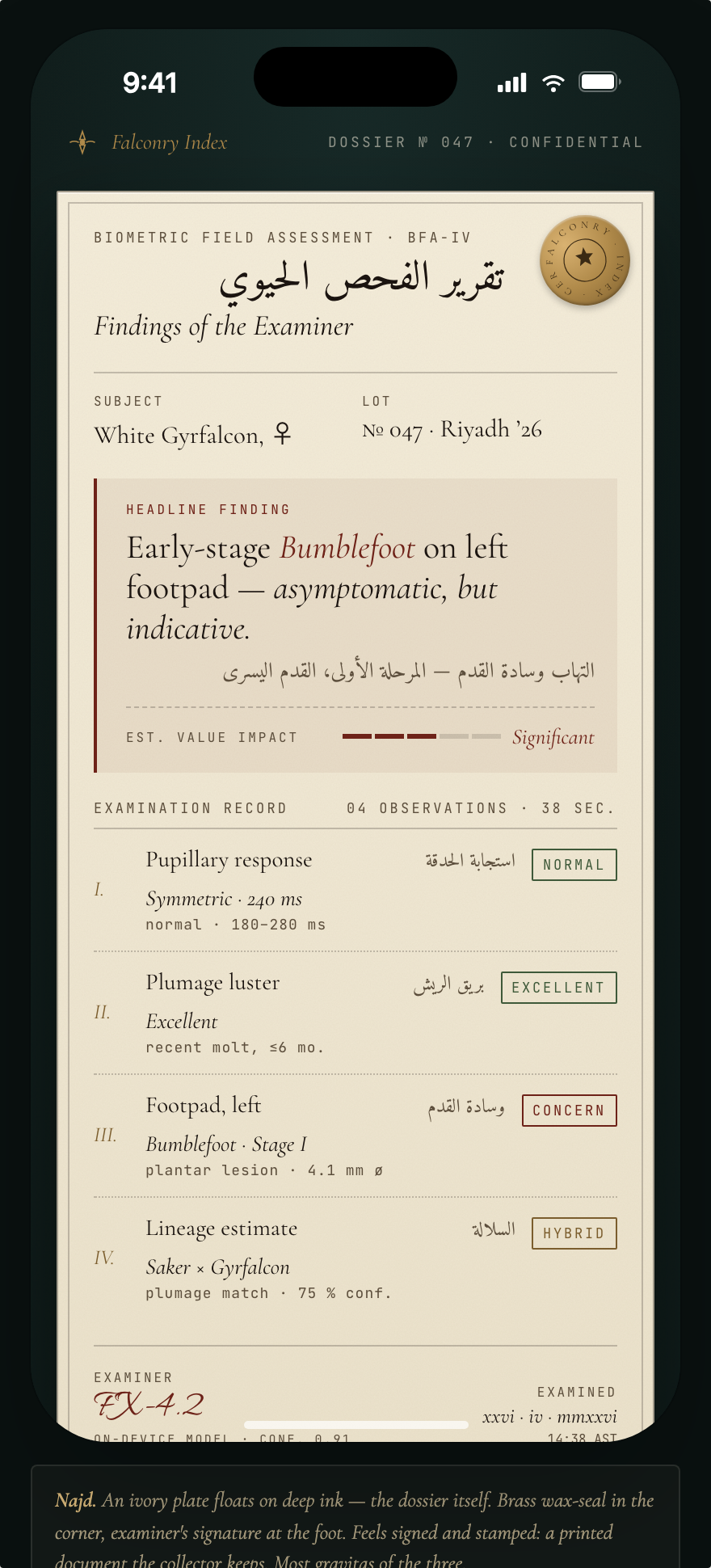
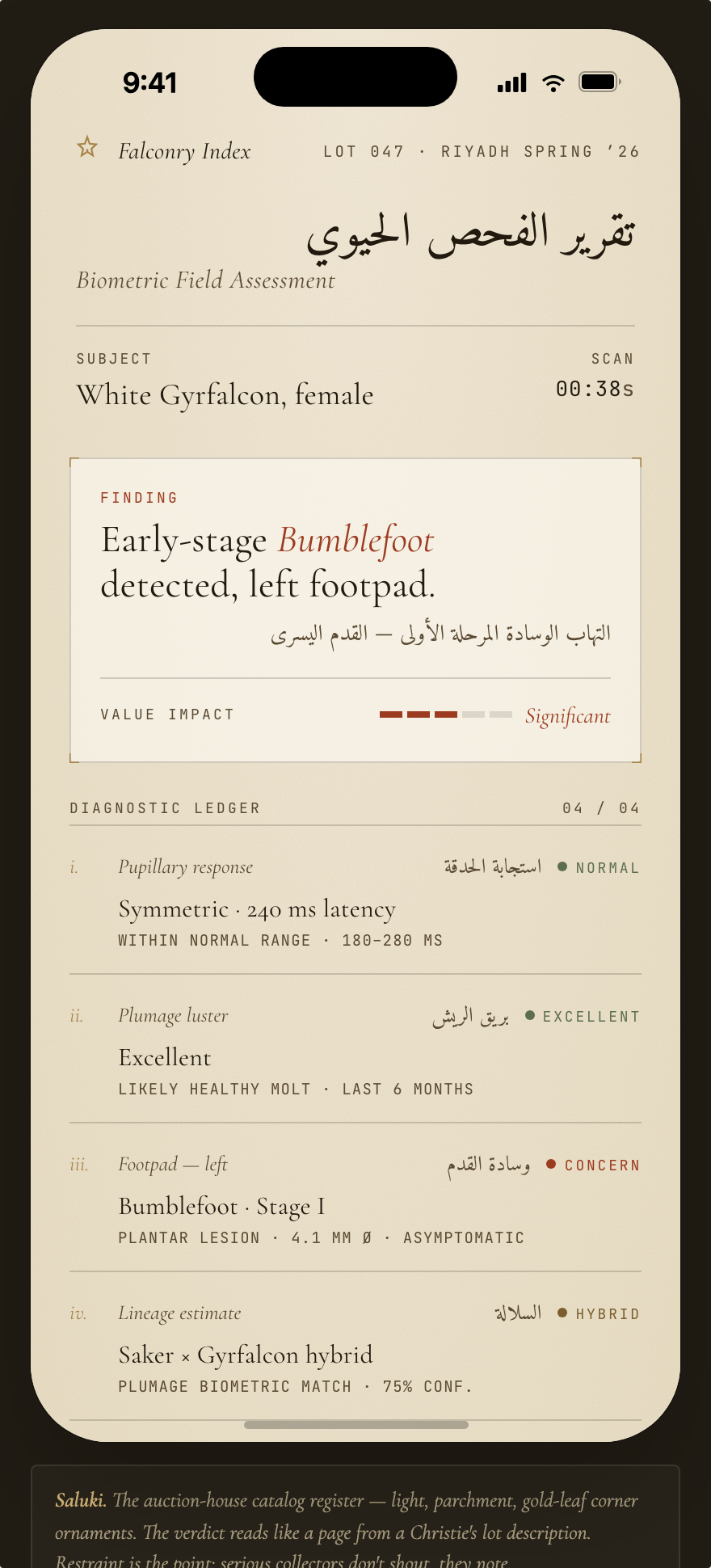
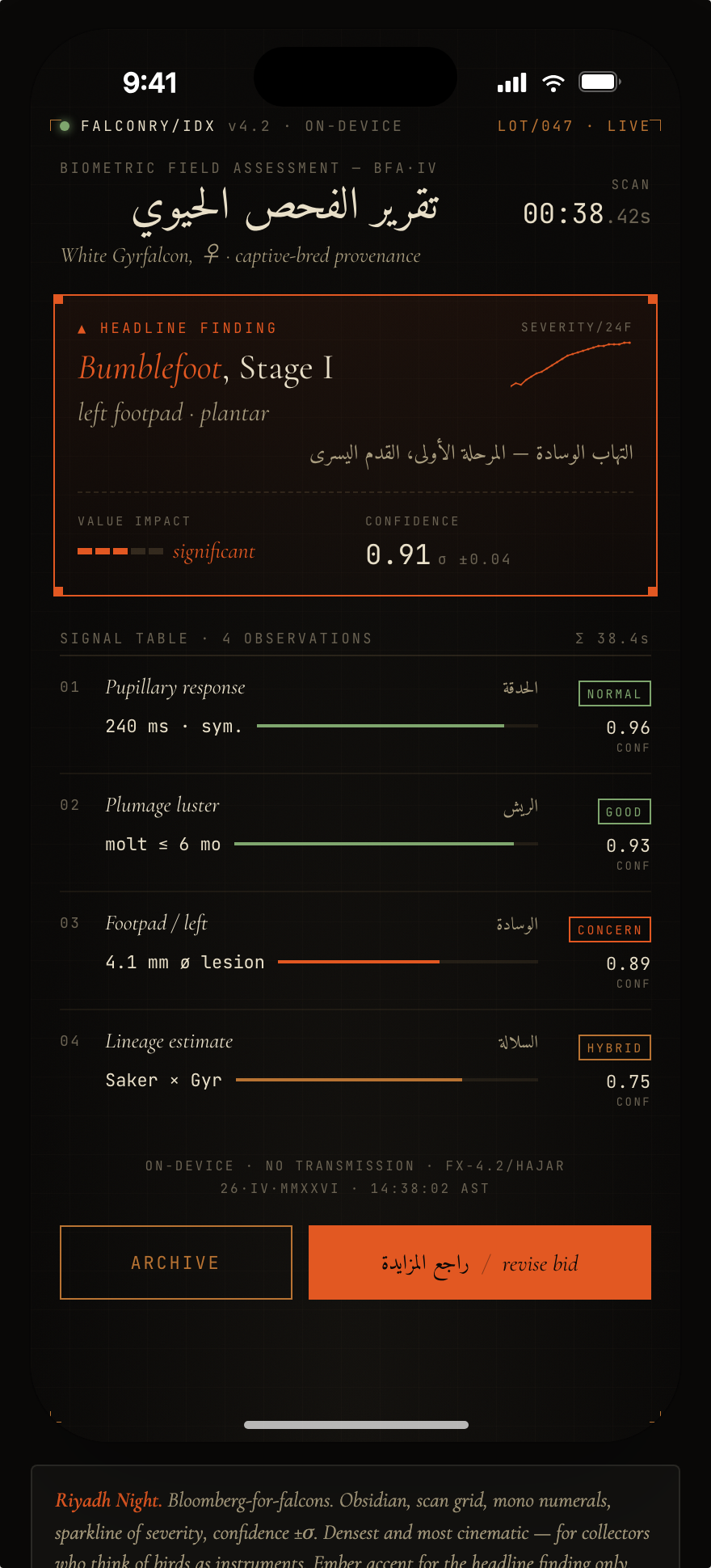
You ask to lift the hood for a moment. That is normal. Your phone is already recording in 4K from the glove-holder’s angle. The AI works quietly on-device. By the time the hood is back on, your phone shows:
- Pupil response: symmetric, normal latency.
- Feather luster: excellent — likely healthy molt in the last 6 months.
- Footpad: early-stage Bumblefoot detected on left foot. Commercial value impact: significant.
- Lineage estimate from plumage: Saker × Gyrfalcon hybrid, ~75% confidence.
You thank the handler and bid 600k instead of 1.2M, with a reason you can name.
The moment it becomes clear
Forty seconds of video changes a seven-figure decision. The collector next to you sees the result and asks whether his cousin can use the same app at the next auction.