How it works today
You run a mid-size contracting firm. To find work, someone has to check dozens of government and corporate procurement sites: different logins, different search boxes, old pages, inconsistent notices.
Miss a day and a good tender can close before you ever see it. Hiring someone to watch the sites helps, but it is expensive and still depends on human attention.
How it works
The core product is not another dashboard to check. It is one useful message in your pocket.
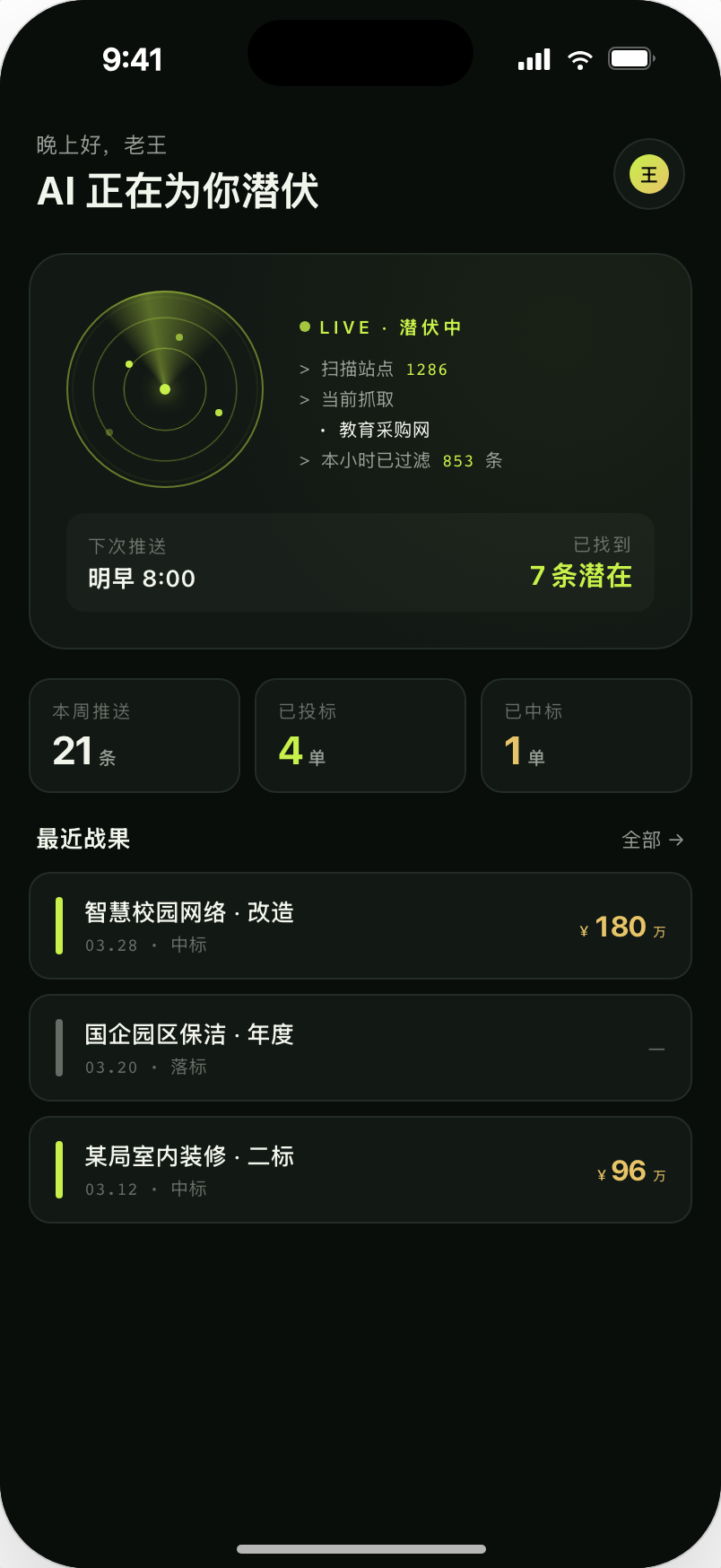
You hand the AI a list of keywords: “smart classroom”, “cafeteria supply”, “VI design”. It crawls the fifty sources every hour, filters out the noise, and scores what’s left against your qualifications.
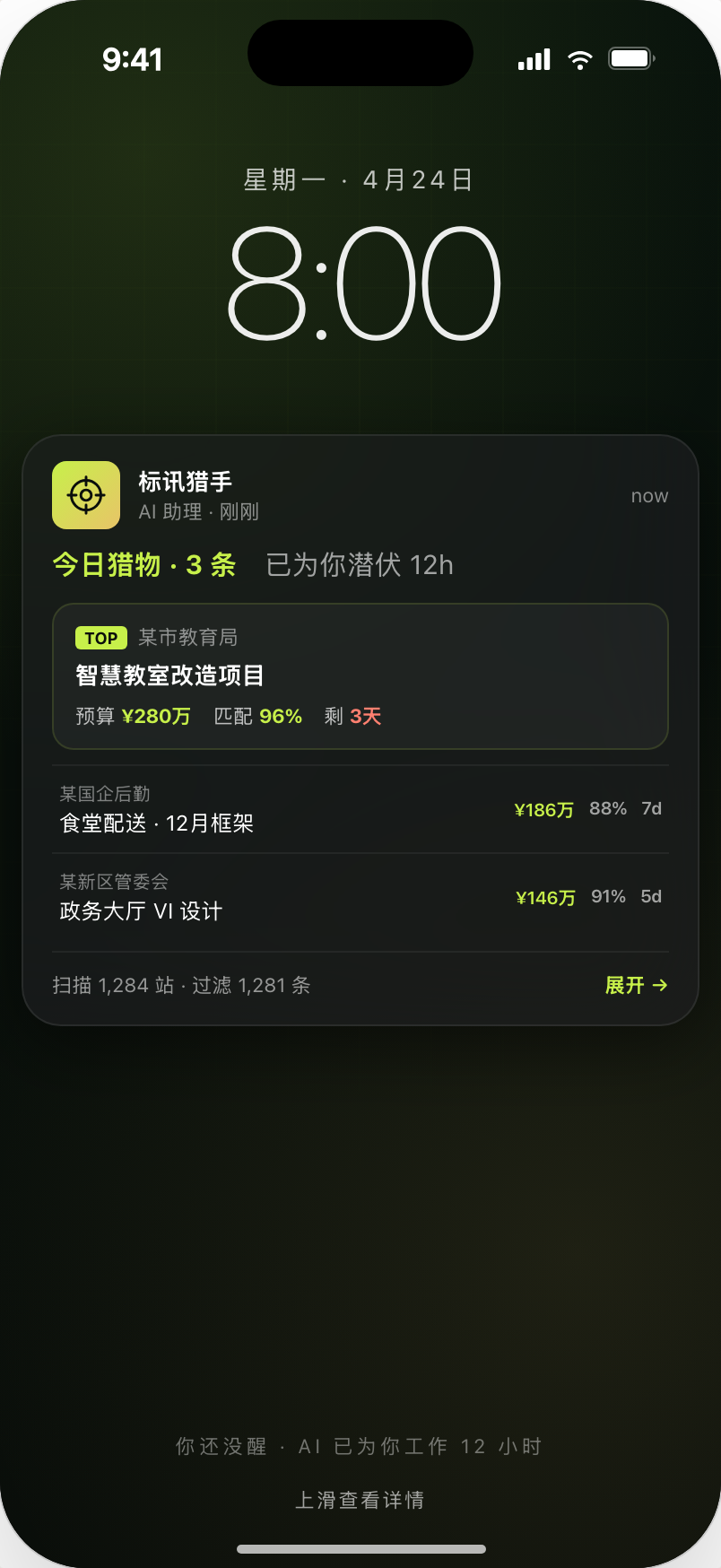
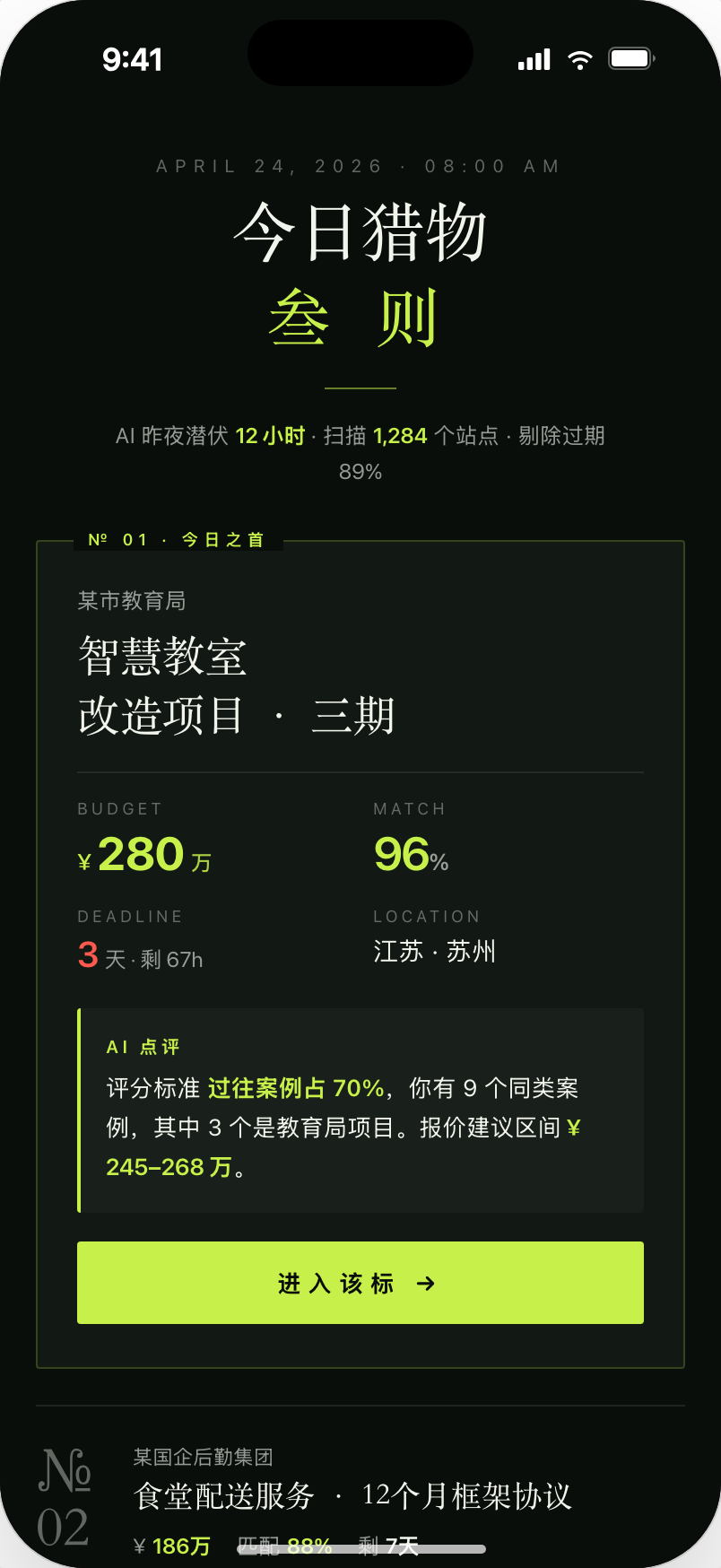
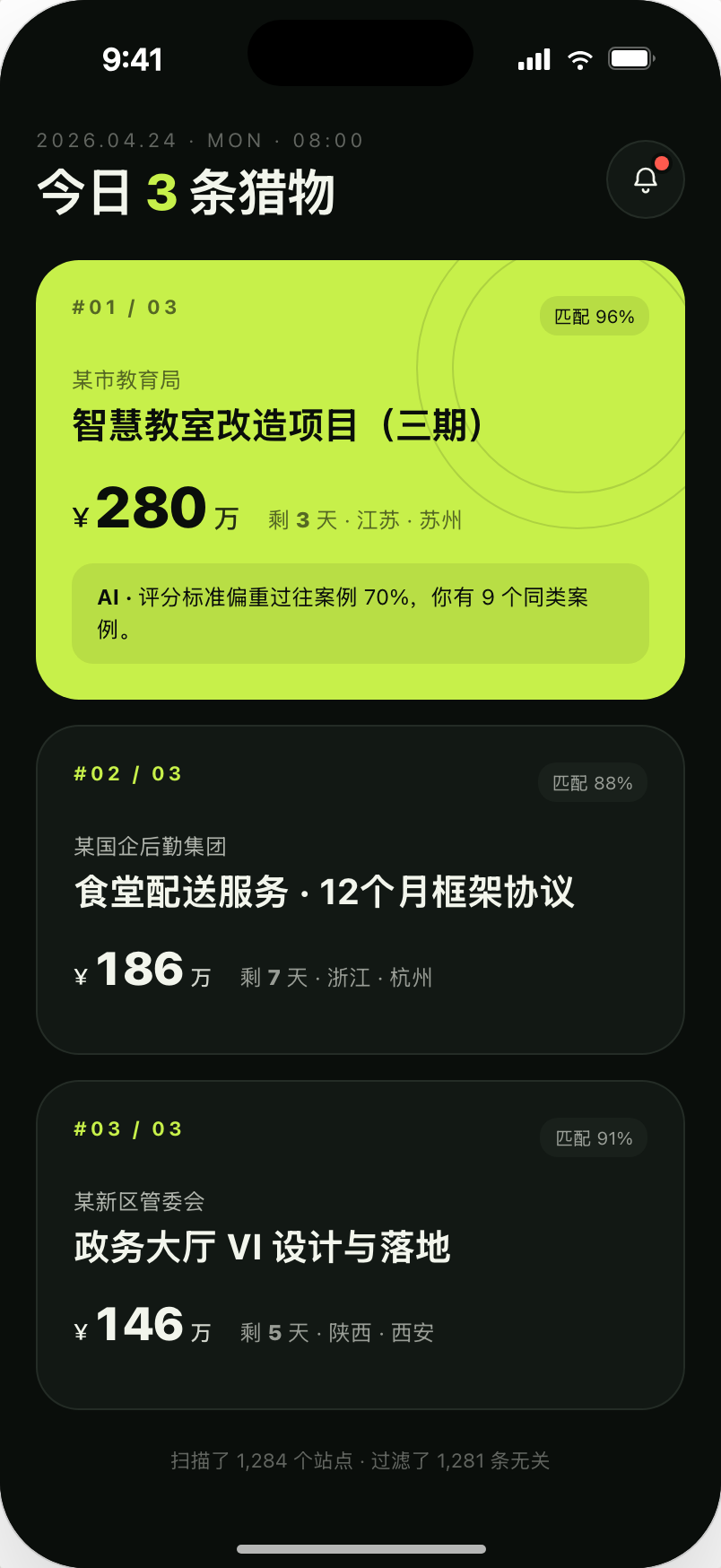
Every morning at 8:00 a.m., you get something like this:
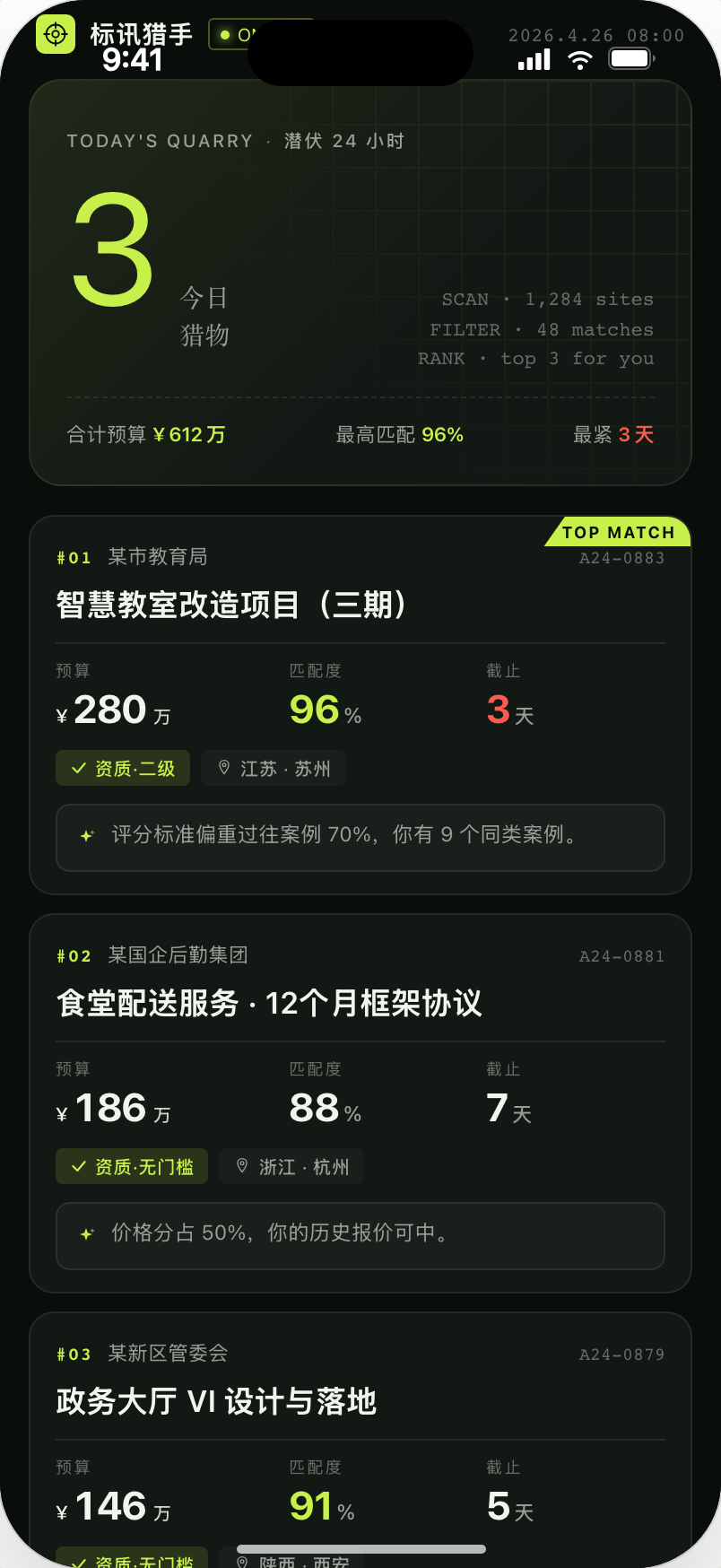
Today’s hunt · 3 matches
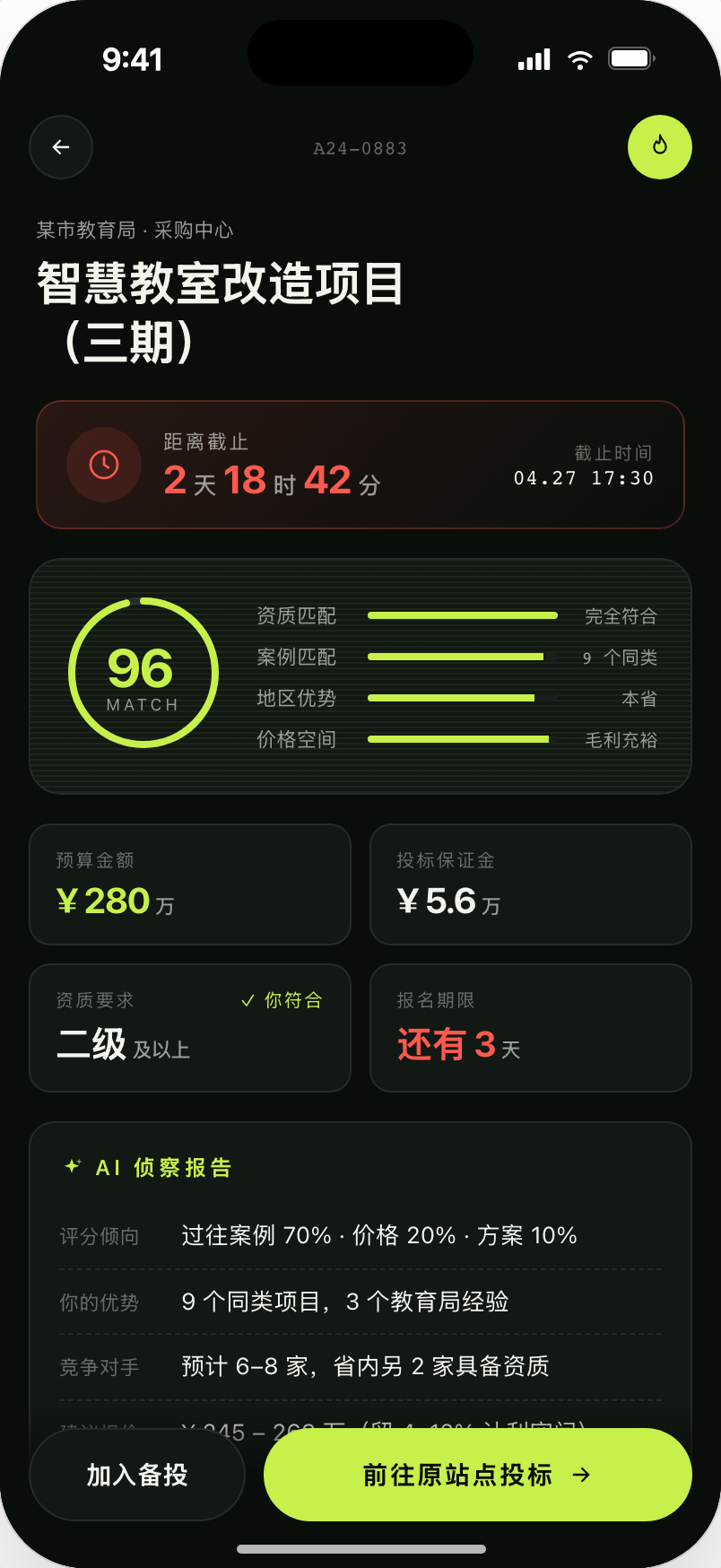
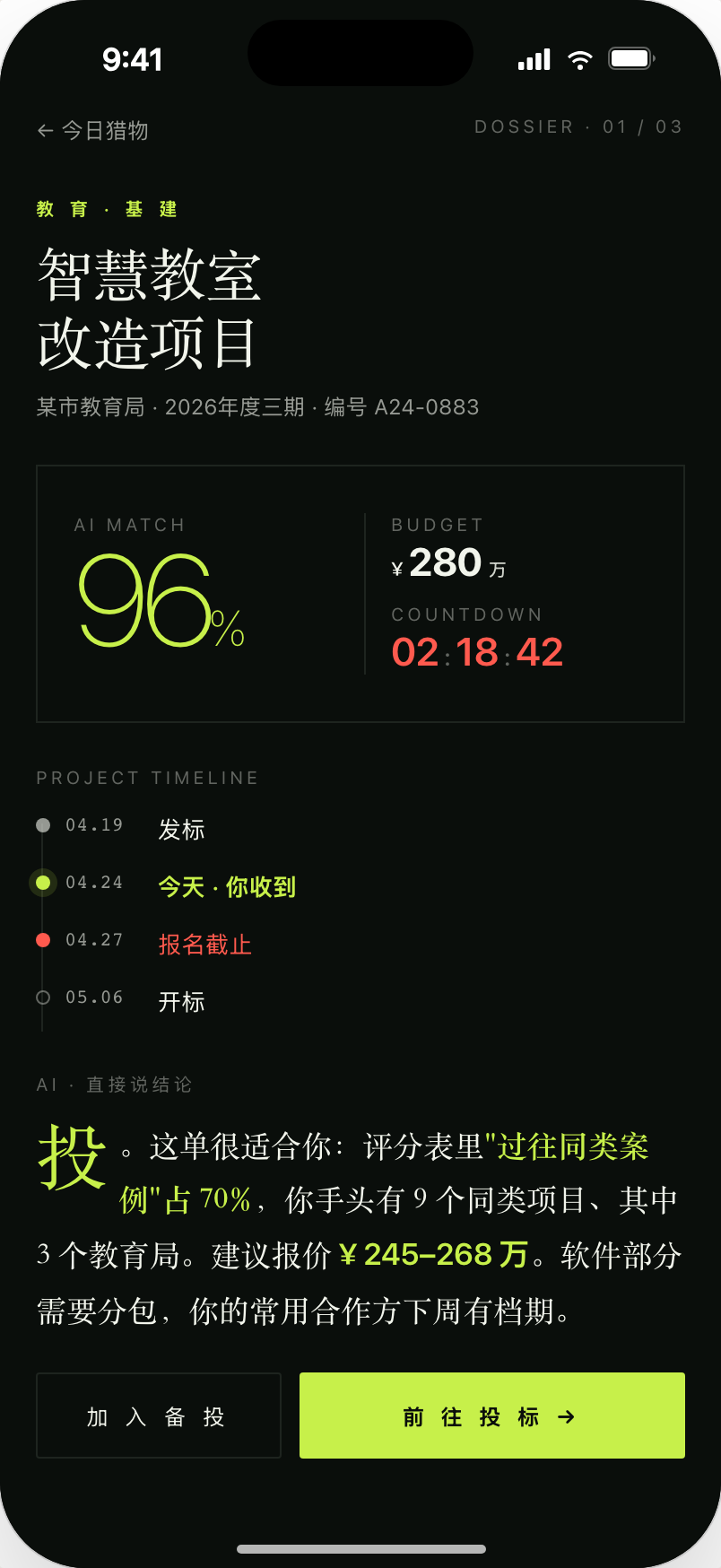
1. Municipal Education Bureau — Smart Classroom Upgrade Budget: ¥2.8M · Requires Tier-II qualification (you qualify) · Deadline: 3 days · Notes: scoring favors past case studies, fits your portfolio. [Open]
The moment it becomes clear
An old friend in renovation told me he had missed a bid because nobody checked the portal at the right time. I built him a small watcher in four hours with a simple scraper and an LLM. Cost: $1.80 in tokens.
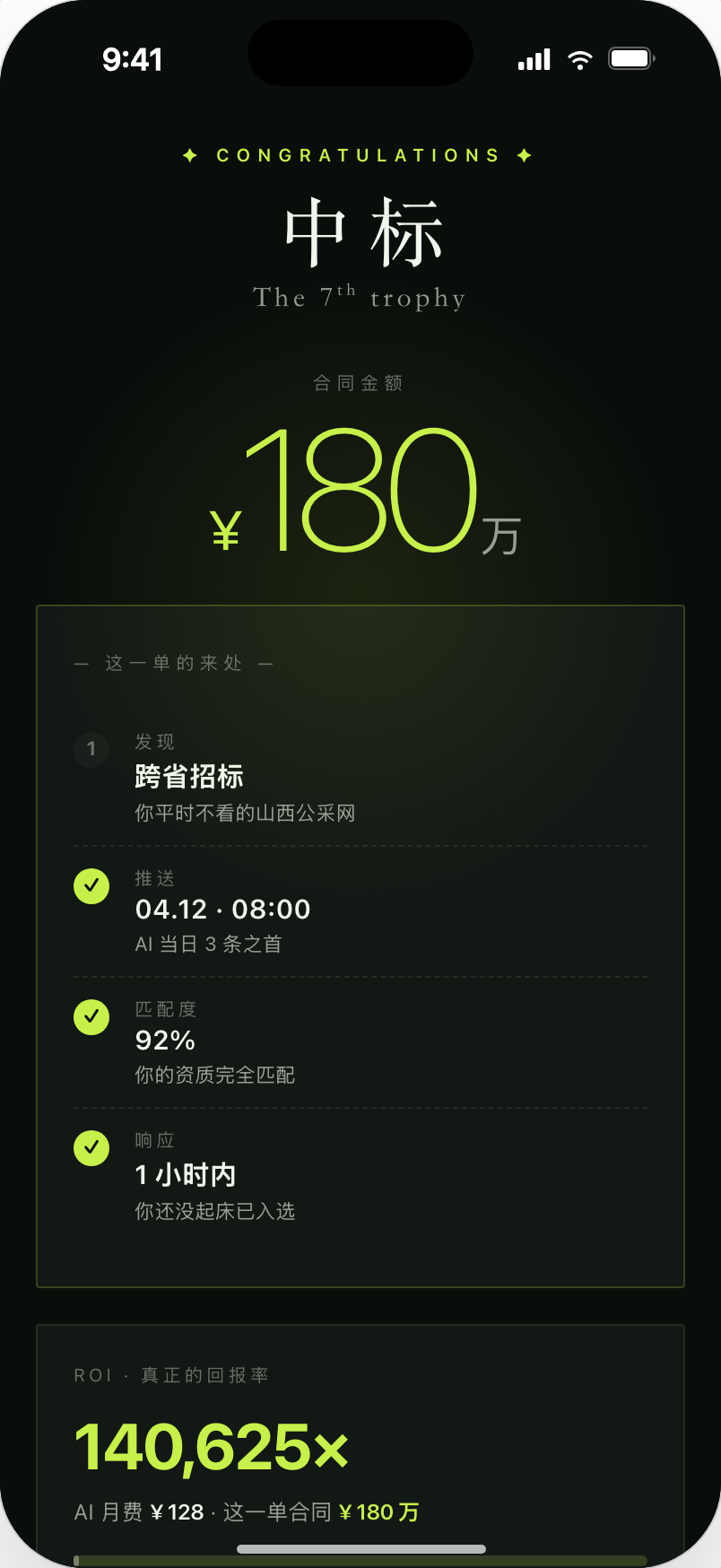
The next morning it sent three matches to his WeChat before he woke up, including one in a province he normally ignored. He won the bid. ¥1.8M contract.
The real comparison is not ¥10 versus ¥1.8M. It is one pair of human eyes versus a system that keeps checking when people are busy doing the actual work.