How it works today
It is April 10. You drive for Uber four nights a week. Under your passenger seat there is a gallon Ziploc bag full of gas receipts, a second one for drive-thru coffees, and a CVS bag with the oil change, the new floor mats, and the parking tickets you meant to sort out. Nothing has a category. Some dates are hard to read. The IRS wants a Schedule C, and you are not sure what belongs on it.
So every year you hand the accountant what you have and probably leave somewhere between $800 and $3,000 unclaimed. You know there is value in the pile. You still do not have a clean way to read it.
How it works
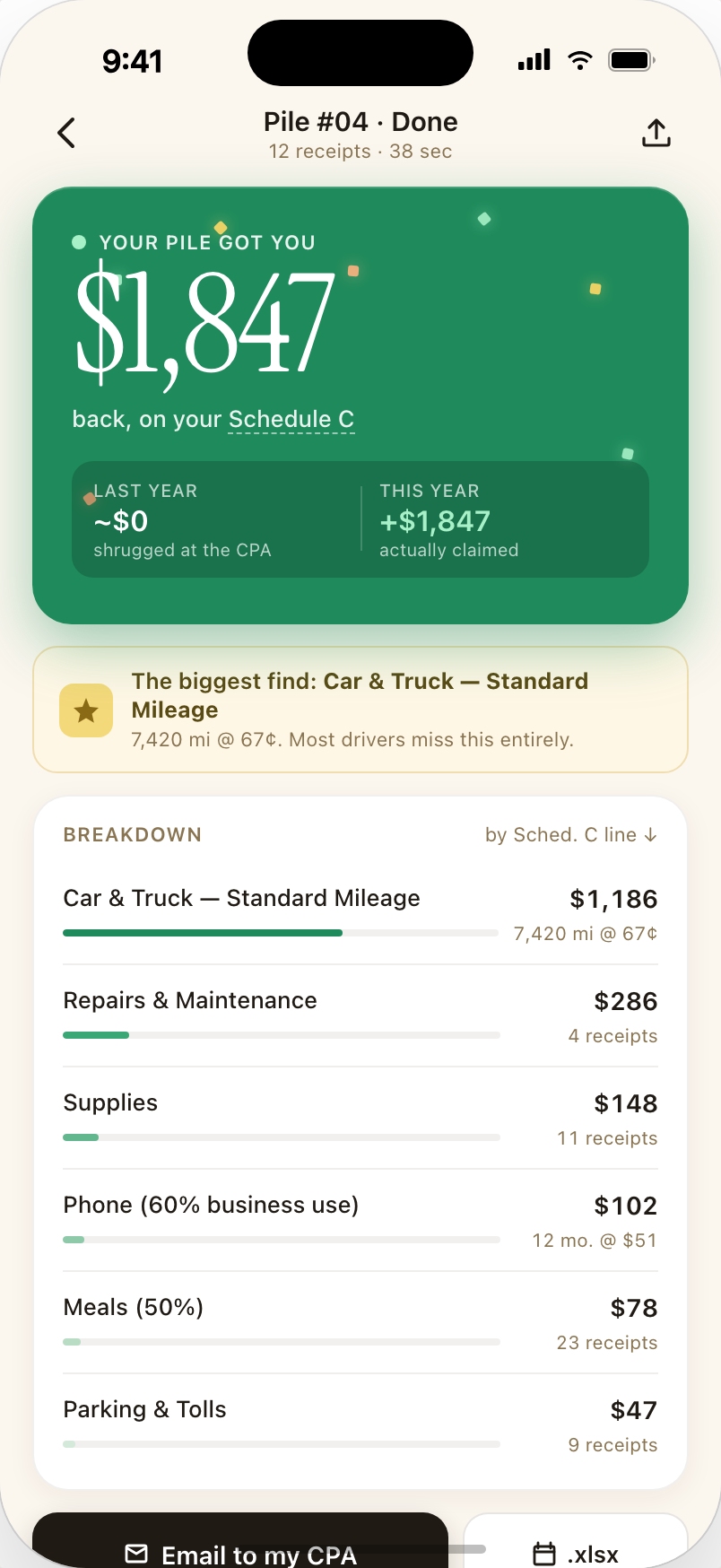
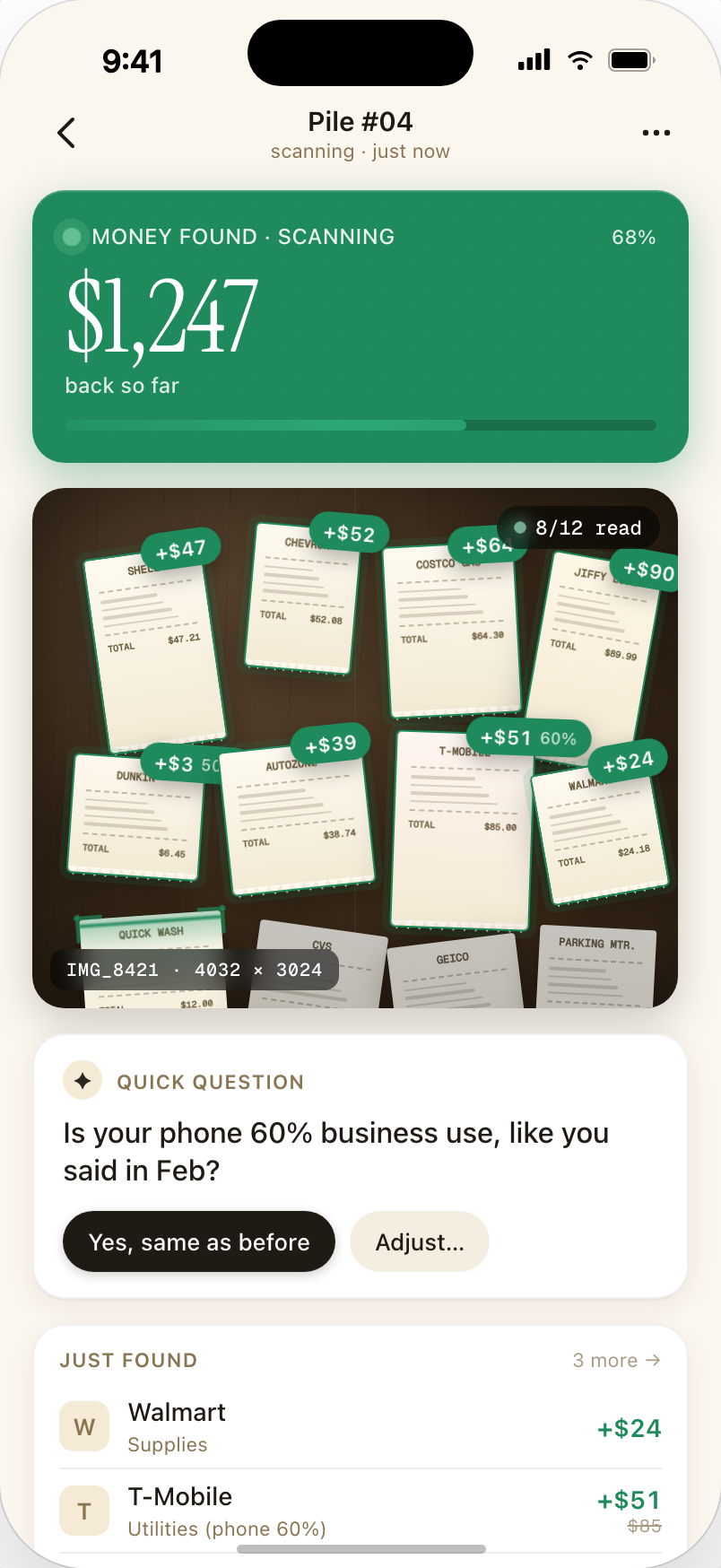
You spread the pile on the kitchen table and take one overhead photo. The AI separates every rectangle, reads each receipt, and asks only the questions it needs: Were the 137 miles on Jan 12 for rides, or personal? Is this phone 100% business, or split? It checks the answers against IRS rules, including standard mileage, meal limits, home-office square footage, and equipment depreciation, then exports an Excel sheet grouped by Schedule C line.
You email the sheet to your accountant. They open it, nod, and file.
The moment it becomes clear
Halfway through the scan, a small bar at the top updates: This pile has found $300 so far. By the end of the session it is $1,847. The receipts were not useless. They were just unreadable as a pile.